
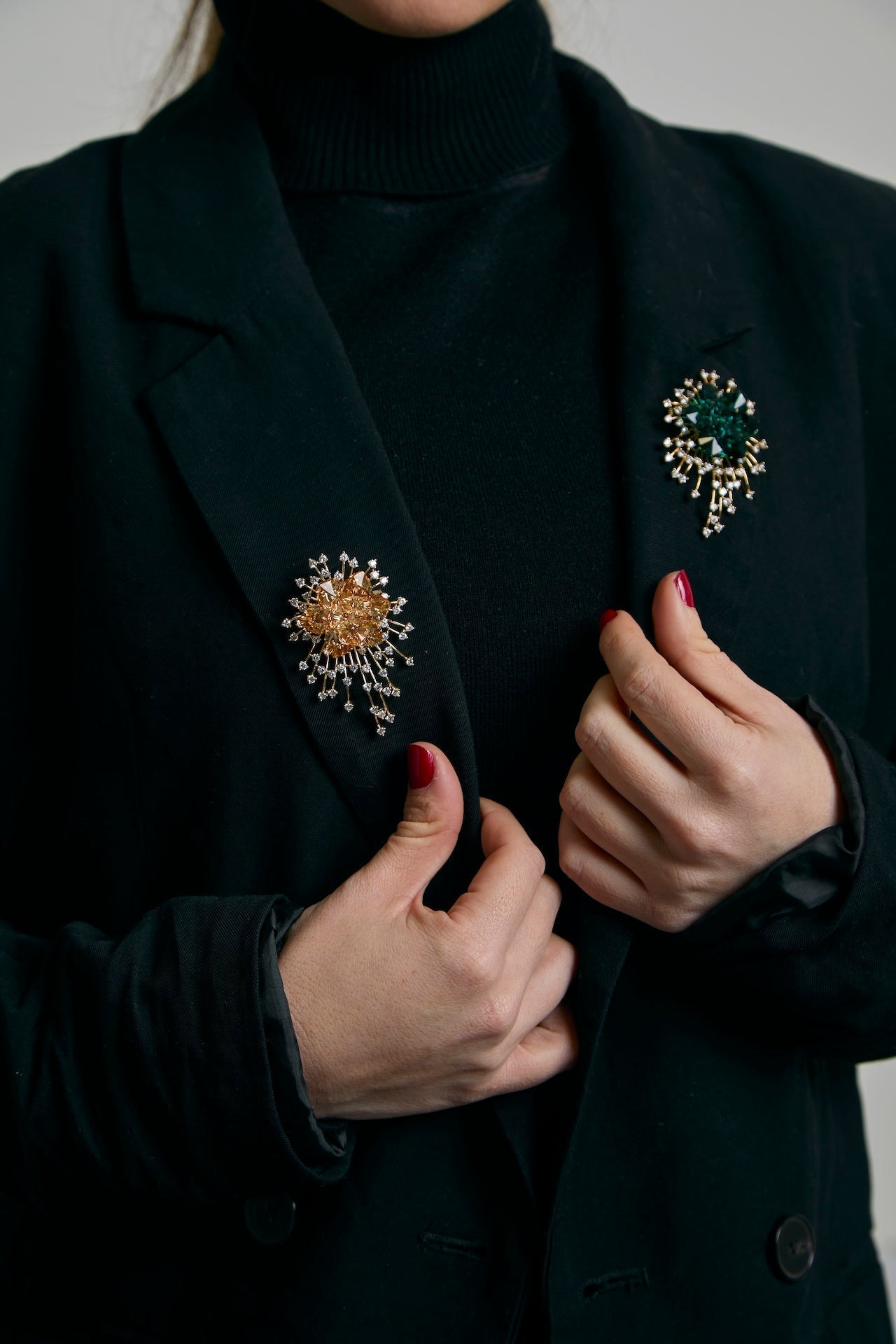
Over the past few seasons, brooches have appeared everywhere. On runways, red carpets, in hair, on plunging necklines and backs, pinned at the waist, or scattered across jackets. They are no longer just accessories: they are a style statement. Major high jewelry houses like Chanel, Boucheron, Chaumet, and Chopard have brought them back, and it's official: brooches are back.
Icons like Queen Elizabeth II turned brooches into legendary pieces, demonstrating how a small detail can completely define a look. Today, a new generation of women understands jewelry differently. It's no longer just about sparkle, but about history, personality, and style. But brooches weren't always tied to glamour.

Queen Elizabeth visits the British Airways headquarters, May 23, 2019 © MAX MUMBY/INDIGO/GETTY IMAGES.
When Brooches Were Practical
Long before the existence of buttons or zippers, people needed a way to fasten their clothes. This is how brooches were born. The earliest examples date back to the Bronze Age, around 3000 BC, when simple metal pins served this purpose.
During the Iron Age, metalwork evolved, and brooches began to look more refined, typically made of tin or copper.
Later, around 400 BC, the Romans called them fibulae. They were still practical but began to incorporate decorative elements. Even then, a brooch could reflect style, identity, or social status.

Bronze fibulae from the Roman period found in Żelechowo. © Wikimedia Commons
Brooches as a Symbol of Identity and Status
Over time, brooches ceased to be simple fasteners and became symbols loaded with meaning. Some represented social rank, others cultural identity. Especially Celtic, Viking, and Roman designs, unique to each region.

The Pitney brooch. - © The Trustees of the British Museum
During the Renaissance and Georgian eras, brooches transformed into true symbols of luxury and status. They were crafted from gold and silver and adorned with precious stones like emeralds, rubies, and diamonds.
These pieces were not mere accessories, but statements of wealth, taste, and social standing, carefully designed to impress in court and among the elite. Artisans constantly experimented, turning each brooch into a small work of art capable of reflecting both personal identity and the trends of the time.
Brooches as Symbols of Love
During the Victorian era, brooches acquired an even deeper emotional value. Some were given as tokens of love and devotion. Others were part of mourning jewelry, used to remember deceased loved ones. Each piece told a story, and many were decorated with precious stones full of symbolism.

Victorian mourning brooch containing the hair of the deceased. © Wikimedia Commons
Why Brooches Are Trending Again
Today, brooches are versatile, personal, and fun. They can transform a simple look into something memorable. You can place a striking brooch on a blazer, combine several small ones on a neckline or waist, or use them on scarves, hats, and even bags.
Brooches blend history and contemporary fashion, vintage charm and current trends, instantly elevating any outfit.
Discover the Arashi House brooch collection here.


